
Drain Camera Inspection Guide for South West Homes
A drain that blocks once may be a simple build-up. A drain that blocks again after plunging, clearing or chemical treatment is usually telling you there is a deeper issue. This drain camera inspection guide explains how CCTV drain inspections work, what they can reveal and when a professional inspection is the sensible next step for homes, businesses and rural properties across Busselton and the South West.
What is a drain camera inspection?
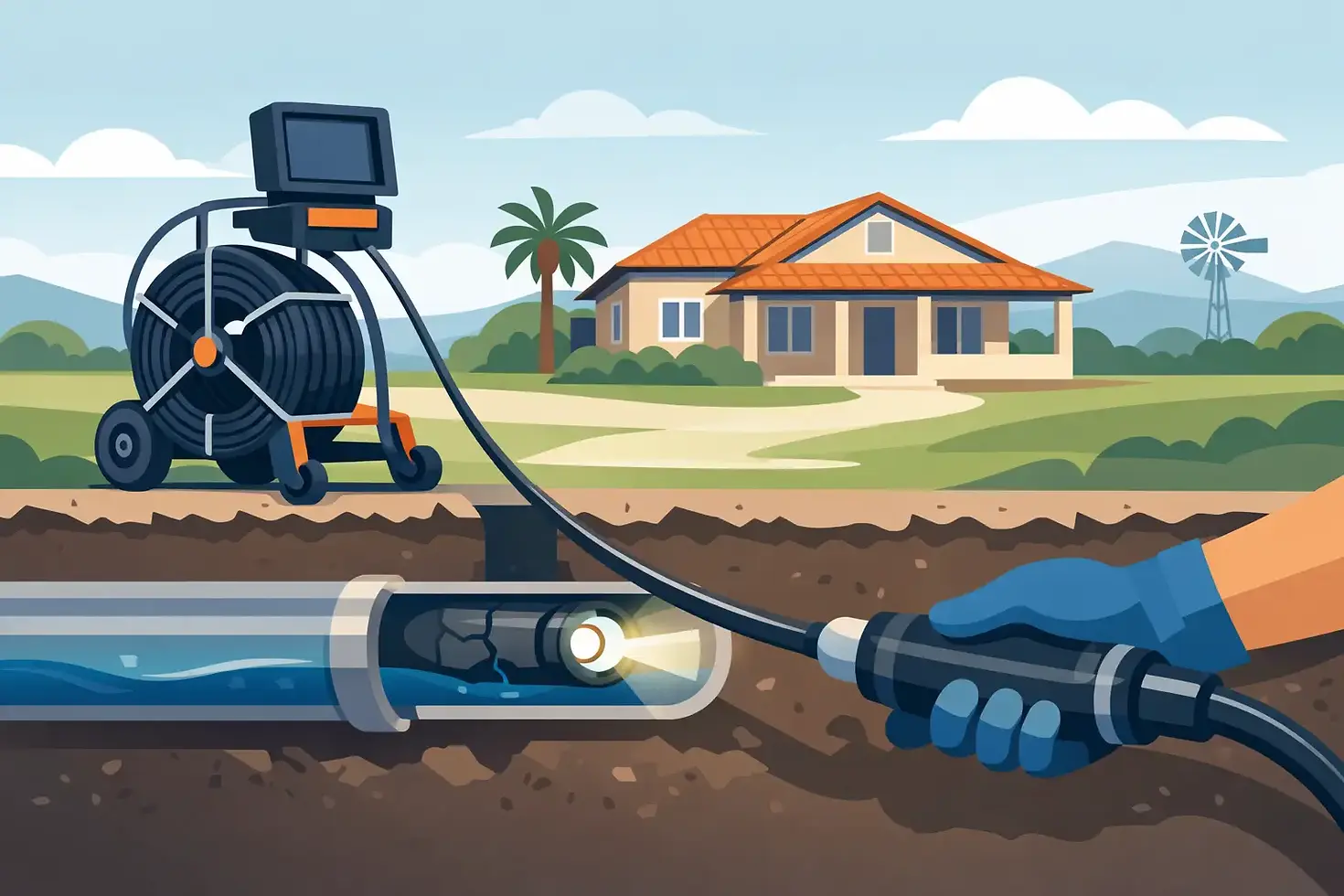
A drain camera inspection uses a purpose-built waterproof CCTV camera attached to a flexible cable. A licenced plumber feeds the camera through an access point, such as an inspection opening or drain inlet, and watches live footage from above ground.
The camera allows the plumber to see inside pipework without digging up lawns, driveways or floors just to locate the fault. It can show the condition of the pipe, where an obstruction sits and whether the issue is likely to return. Depending on the system and access available, the inspection can cover household sewer drains, stormwater lines and larger commercial drainage runs.
It is a diagnostic tool, not a repair on its own. The value is in replacing guesswork with a clear view of what is happening below ground, so the right repair can be recommended from the start.
When a CCTV drain inspection is worth arranging
Not every slow-draining basin needs a camera straight away. Hair, soap residue and small local blockages can often be cleared through normal maintenance. A camera inspection becomes more useful when the same problem keeps returning, several fixtures are affected, or the cause is unclear.
Common warning signs include a toilet that backs up or gurgles, drains that smell despite cleaning, water pooling around outdoor gullies, or a sink and shower draining slowly at the same time. In these cases, the issue may be further down the line than the fixture itself.
For South West properties, established trees are a frequent factor. Tree roots naturally seek moisture and can enter older pipes through small gaps or failed joints. Sandy ground, ground movement, ageing earthenware pipes and poorly graded stormwater lines can also contribute to recurring drainage problems.
A camera inspection is also useful before major work begins. Homeowners planning an extension, renovation, new driveway or outdoor area may need to know where drainage pipes run and whether they are in sound condition. Property managers can use it to investigate repeat tenant reports rather than approving the same temporary clearing work again. For rural properties, long private drain runs and limited access can make accurate fault location especially valuable.
How a drain camera inspection is carried out
The exact process depends on the type of drain, the property layout and the blockage itself. In most cases, the work follows a practical sequence.
First, the plumber identifies the affected fixtures and suitable access points. They will ask when the issue began, whether it happens after rain, and if previous repairs or blockages have occurred. This background often helps distinguish between sewer, stormwater and local fixture problems.
If the line is heavily blocked, it may need clearing before the camera can pass through or provide useful footage. High-pressure drain cleaning is commonly used to remove grease, silt, roots or debris. Sending a camera into a pipe full of dirty water can show that a blockage exists, but not always why it has formed.
Once there is a clear path, the camera is fed through the pipe. Live images show the internal condition of the drain, while a locator can help identify the camera's position from the surface. This is particularly helpful where repair work is needed, as it can reduce unnecessary excavation.
The plumber then explains what the footage shows in plain terms. You should understand whether the problem is a removable blockage, a damaged section of pipe, root intrusion, poor drainage design or another issue. If repairs are recommended, ask what is urgent, what can be monitored and what outcome the proposed work is intended to achieve.
What drain cameras commonly find
CCTV inspections can reveal several types of faults, and the correct fix depends on the condition of the pipe rather than the symptoms alone.
Tree root intrusion
Roots can enter through joints, cracks or older pipe connections. At first, they may cause occasional slow drainage. Over time, they trap toilet paper, grease and other debris until the line blocks more often. Clearing roots can restore flow, but a pipe with open joints or cracks may need repair or replacement to prevent the roots returning.
Cracked, broken or displaced pipes
Pipes can crack due to age, movement in the ground, vehicle loading or poor installation. In some cases, sections separate or sink, creating a low point where waste and water collect. A camera helps show whether a targeted repair is possible or whether a longer section needs attention.
Grease, scale and household debris
Kitchen drains can gradually narrow with fats, food waste and detergent residue. Bathroom lines may collect hair and soap. These blockages are often cleared effectively, but the footage can show whether the pipe is otherwise healthy. It may also identify habits or fixtures contributing to the issue.
Stormwater debris and poor falls
Leaves, sand, roof debris and silt can build up in stormwater drains, particularly after heavy rain. A camera may also reveal sections with insufficient fall, where water sits instead of moving freely towards the lawful point of discharge. Cleaning helps with debris, but poor grading or damaged pipework may require further work.
What a camera inspection cannot tell you on its own
A drain camera is highly useful, but it has limits. If a pipe is completely blocked and cannot be cleared, the camera may not be able to travel past the obstruction. Murky water, tight bends, collapsed pipework and inaccessible sections can also restrict what is visible.
The footage shows the inside of a drain, not every service running around it. It does not replace careful planning before excavation, nor does it automatically confirm the cause of every damp area or water leak. In some situations, camera findings need to be considered alongside drain cleaning, leak detection, surface levels or further testing.
That is why the experience of the plumber matters as much as the equipment. A useful inspection should lead to a proportionate recommendation, not unnecessary work. Sometimes the right answer is a thorough clean and monitoring. Other times, repeated clearing is only delaying a proper repair.
Preparing for your inspection
You usually do not need to do much before a drain camera inspection. If possible, avoid using lots of water immediately beforehand, especially if the drain is already slow or backing up. Keep access clear around inspection points, outdoor gullies and the area where the problem is occurring.
Let the plumber know about recent building work, known pipe repairs, septic or on-site wastewater systems, large trees and whether the issue worsens during rain. For rental and commercial properties, details about the frequency of the problem and which areas are affected can save time on site.
It is also sensible to ask whether the inspection includes recorded footage, images or a written explanation of the findings. The right level of documentation depends on the job. A simple domestic blockage may only need a clear explanation and repair advice, while a property purchase, insurance matter or larger commercial issue may require more detailed records.
Choosing the right response after the inspection
The best next step should match the fault found. A drain with grease build-up and no pipe damage may only need professional cleaning and better ongoing maintenance. Root-affected pipework may need roots removed first, followed by repair, relining or replacement depending on the damage and pipe type.
For a collapsed or badly displaced line, excavation may be the most reliable solution. It is more disruptive than cleaning, but it addresses the underlying failure. Where a localised defect is identified accurately, targeted excavation can avoid disturbing a much larger area than necessary.
Ask for the practical reasoning behind each option, including expected durability, access requirements and whether the problem is likely to recur. SmartFlow Plumbing & Gas takes a straightforward approach: identify the cause, explain the condition of the drain and recommend work that suits the property rather than treating every blockage as the same job.
A recurring drainage issue rarely improves by itself. Arranging an inspection before a minor blockage becomes an overflow, damaged landscaping or a disruption to your home or business can save considerable inconvenience. The clearest path forward is usually to see the problem properly, then fix what the footage actually shows.


Comments