
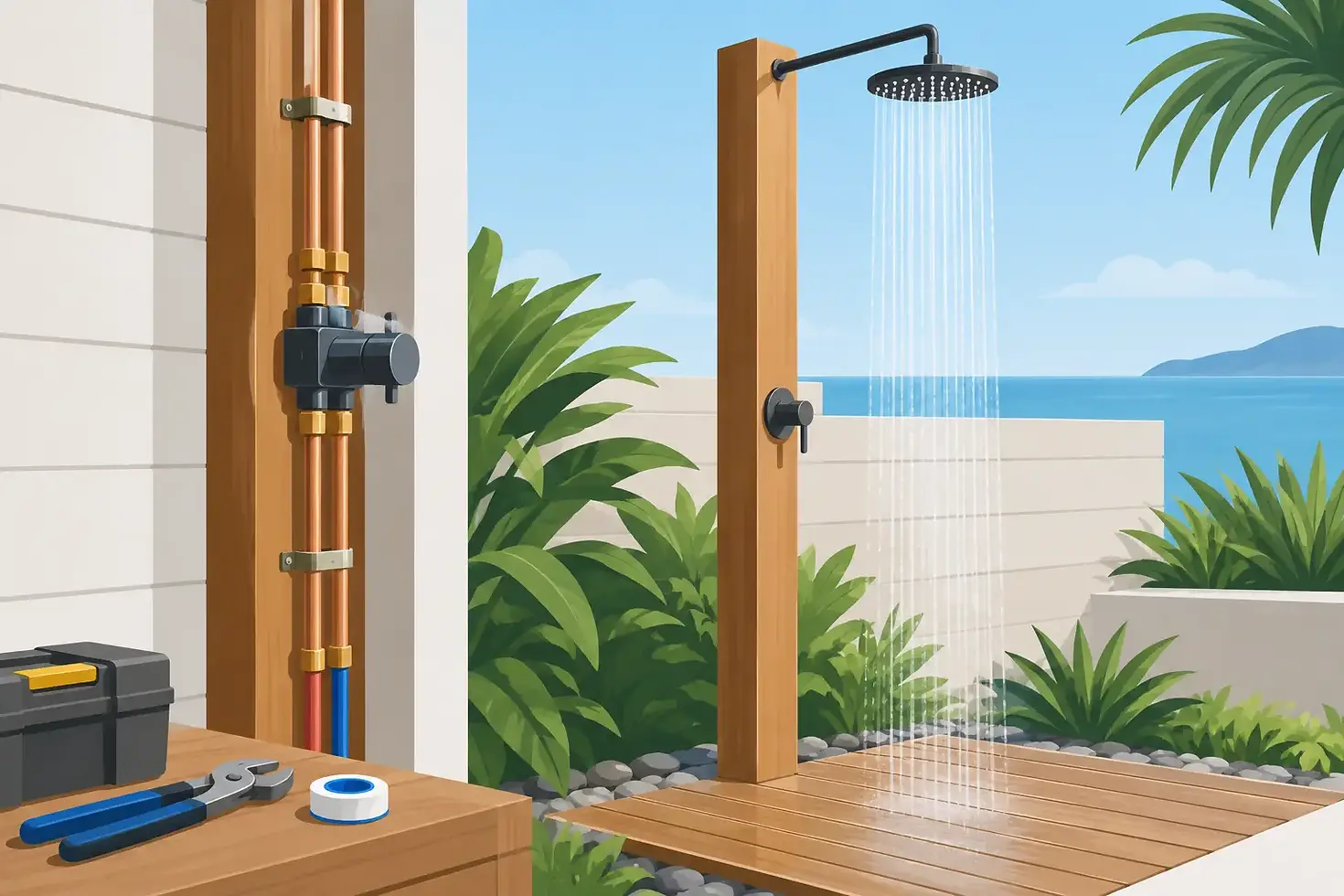
Outdoor Shower Plumbing Installation Made Simple
A well-placed outdoor shower can keep sand out of the house after a beach day, rinse off muddy boots on a rural property, or make a pool area far easier to use. But outdoor shower plumbing installation is more than fitting a shower head to an external wall. The water supply, drainage route, hot water capacity and finish materials all need to suit the property and local conditions.
In Busselton and across the South West, the best result starts with planning the plumbing before landscaping, decking or paving is locked in. It avoids costly rework later and gives you an outdoor shower that is simple to use, easy to maintain and built to last.
Start with the shower's purpose and location
The intended use shapes almost every installation decision. A cold rinse shower beside the pool has different requirements from a fully heated shower used daily after surfing or working outdoors. A shower at a holiday home may need to handle frequent summer use, while one at a rural property may be primarily for cleaning up before entering the house.
Choose the location with access in mind. Positioning the shower close to existing bathroom, laundry or hot water pipework can reduce the amount of excavation and new pipework required. It may also make it easier to connect the waste line to the property's sewer or approved wastewater system.
Privacy, wind exposure and foot traffic matter too. A shower that faces the prevailing weather can be unpleasant in winter, while water running across a path, deck or pool surround creates a slip hazard. Allow enough room for drainage falls, maintenance access and a stable base underfoot.
Outdoor shower plumbing installation: the key decisions
A reliable installation brings together four systems: cold water supply, hot water supply where required, drainage and safe fixture placement. Treating any one of these as an afterthought can affect performance or create compliance issues.
Cold and hot water supply
A cold-only shower is the most straightforward option, but it still needs a suitable isolation valve and pipework designed for outdoor exposure. Where hot water is needed, the available hot water system needs to be assessed. A small storage unit may cope with a quick rinse, but can struggle if the outdoor shower is used alongside bathrooms, laundry appliances and kitchen taps.
Pipe runs should be sized appropriately and protected from physical damage, sunlight and unnecessary heat loss. Exposed plastic pipework can deteriorate under strong WA sun if it is not made for the application or properly protected. Concealed pipework needs careful planning so future repairs do not mean lifting large sections of decking or paving.
Temperature control is particularly important for family homes and short-stay properties. A properly selected tempering arrangement helps deliver safe water temperatures at the shower outlet. The right setup depends on the hot water system, intended use and applicable plumbing requirements.
Drainage is not optional
The most common mistake with outdoor showers is assuming the water can simply soak into the ground. That may be unsuitable for the soil type, the amount of use, the products being washed off, and the property's sewer, septic or onsite wastewater arrangement. Soapy water near gardens, boundary lines, building footings or a pool area can create problems over time.
A shower used regularly generally needs a considered waste solution, including a graded floor or shower base and a correctly installed drain. The waste may connect to sewer where available, or require a design that works with an approved onsite system. Requirements can differ between properties and local areas, so this should be checked before work begins rather than after the paving is complete.
Good drainage also protects the surrounding area. Water should not pond against the house, wash out sand beneath pavers, or run onto neighbouring land. On sloping sites, the drainage route deserves extra attention because a small amount of daily water can travel a long way.
The shower base and surface finish
The plumbing is only part of the job. The surface beneath the shower needs a controlled fall towards the drain and enough grip when wet. Tiles, concrete, composite decking and natural stone can all work, but each has different detailing needs around penetrations and drainage.
Timber decking can look excellent around an outdoor shower, particularly in coastal settings, but the plumbing should remain accessible where practical. Select corrosion-resistant fixtures and fixings suited to the location. Salt air, bore water and pool chemicals can all shorten the life of poorly chosen taps, shower rails and drains.
Backflow and cross-connection protection
Outdoor taps and showers can be exposed to hoses, pools, irrigation systems and cleaning equipment. In some situations, backflow protection may be needed to prevent contaminated water from entering the drinking water supply. This is especially relevant on commercial sites, rural properties and homes with more complex irrigation or water treatment systems.
A licensed plumber can assess the risk and specify the appropriate protection. It is a small part of the overall project, but an important one for protecting water quality and meeting plumbing requirements.
Plan the work before the landscaping goes in
Outdoor shower projects often sit at the end of a renovation, when the new deck, fence and garden are already taking shape. From a plumbing perspective, it is better to bring the shower plan forward. Pipework and drainage are much easier to install before concrete is poured, decking is laid or established plants are in the way.
Before construction starts, confirm the following practical points:
where the cold and hot water lines will connect;
whether the current hot water system can meet demand;
where shower water will drain and how the floor will fall;
whether there are existing underground services in the area; and
what approvals or site-specific requirements apply to the property.
This is also the time to decide whether the shower needs a privacy screen, lighting, a nearby hose tap or a foot-wash tap. Including these details early often costs less than adding them after the main work is finished.
Compliance and licensed plumbing work in WA
Water supply and sanitary drainage work should be completed by appropriately licensed plumbing professionals. This is not just about getting a neat finish. Correct installation protects the potable water supply, manages wastewater safely and helps prevent leaks behind walls, under decks and beneath paved areas.
Depending on the scope of the project, the property location and how wastewater is managed, permits or approvals may be relevant. New builds, renovations, strata properties, commercial premises and rural sites can each introduce additional considerations. If the shower is near a pool, take electrical clearances and pool barrier requirements into account as well.
A site inspection is the sensible starting point when the installation involves new drainage, hot water extensions or work near existing services. It gives the plumber a chance to check pipe routes, ground levels, water pressure and the condition of the existing plumbing before recommending a practical approach.
Keep maintenance simple from day one
Outdoor fixtures work harder than indoor ones. Sand, leaves, insects, salt air and UV exposure all take their toll. Choose quality taps and a shower head that can be cleaned easily, and make sure isolation valves can be reached without removing fixed panels or landscaping.
If the shower is only used seasonally, run it regularly enough to keep water fresh in the lines and check for drips around connections. Clean the drain grate before leaves and hair build up, particularly after busy holiday periods. A small leak outdoors can go unnoticed for months, wasting water and softening the ground around the structure.
For homes on rainwater, bore water or an onsite wastewater system, routine checks are even more worthwhile. Water quality and system capacity can influence fixture choice, cleaning needs and how the shower is used.
An outdoor shower should feel like a practical part of the property, not another maintenance job waiting to happen. With the pipework, drainage and finishes planned together, it can handle sandy feet, wet swimmers and everyday use with confidence. For projects across Busselton and the South West, SmartFlow Plumbing & Gas can assess the site and install an outdoor shower setup that suits the way your property works.


Comments