

Strata Plumbing Responsibilities Explained
A ceiling stain beneath an upstairs bathroom can quickly raise a difficult question: is it the owner’s problem, the strata company’s problem, or both? Strata plumbing responsibilities explained properly come down to where the fault sits, what the strata plan says, and whether the pipe or fixture services one lot or more than one.
For owners, tenants and strata managers in Busselton and across the South West, the practical priority is always the same: stop water damage, keep people safe and get a licensed plumber to identify the source. Working out who pays can follow once the immediate risk is under control.
Why the boundary is not always obvious
In a standalone home, the owner generally manages plumbing from the house through to the property connection, subject to local authority requirements. In a strata scheme, pipework can run through walls, floors, ceilings, common gardens and shared service areas. A leak may show up in one apartment but originate from another lot or from common property.
The key distinction is usually between lot property and common property. Lot property is the area owned by an individual owner. Common property is shared and managed by the strata company. But do not rely on what seems logical from inside the building. A pipe concealed within a wall may be private in one scheme and common property in another, depending on the registered strata plan and the scheme’s by-laws.
This is why a proper assessment matters. Repairing the visible damage without finding the source can leave the same issue to return after the next shower, heavy rain or pressure change.
Strata plumbing responsibilities explained by area
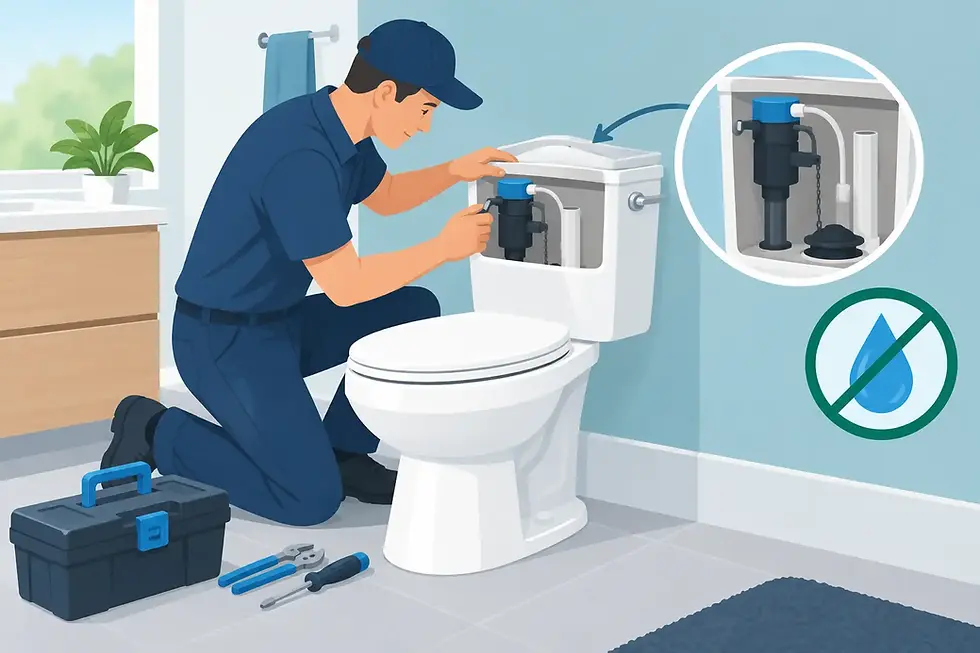
As a general guide, an owner is commonly responsible for plumbing fixtures and fittings that serve only their lot. This can include taps, toilets, basin wastes, shower fittings, internal appliances and a private hot water system. If a toilet is leaking because of a failed inlet valve, for example, that is often an owner responsibility.
The strata company is commonly responsible for shared plumbing infrastructure and common property. This may include main water supply lines, communal sewer lines, common drains, roof drainage, stormwater systems, shared hot water equipment and plumbing located in common areas.
However, the service path is often more useful than the location alone. A pipe inside a lot may still be part of a shared system if it supplies several units. Equally, a pipe beneath a common driveway may serve only one lot. The strata plan, the point where the service branches and the specific fault all need to be considered.
Water leaks between lots
Leaks between units are among the most common strata disputes because the affected owner is often not the owner of the failed plumbing. Water can travel some distance before appearing as a damp patch, bubbling paint or mould.
A plumber may need to test fixtures, inspect accessible pipework and use leak detection equipment to trace the source. If the fault is a shower recess, flexi hose, toilet connection or private pipe serving one lot, the relevant owner may be responsible for the repair. If it is a shared riser, communal line or common-property pipe, the strata company will generally need to arrange the work.
The ceiling, wall lining or flooring damaged by the leak can be a separate question. Responsibility for the repair source and responsibility for resulting damage are not always identical, particularly where insurance is involved.
Blocked drains and sewer lines
A blocked toilet or basin drain serving one unit is often a lot issue. A blockage in a shared sewer line, however, can affect multiple properties and is more likely to fall under the strata company’s maintenance duties.
CCTV drain inspections can be particularly useful in strata buildings. They show whether the cause is a local obstruction, collapsed pipe, displaced joint, tree roots or a problem further down a shared line. This evidence helps strata managers make an informed decision and reduces the risk of repeatedly clearing a drain without addressing the underlying defect.
Care is needed where inappropriate items have been flushed or washed into the system. Even if a line is shared, a strata company may investigate whether a particular resident caused the blockage before deciding how costs are handled.
Hot water systems and gas services
Hot water responsibility depends on the setup. A storage or instantaneous unit installed solely for one lot is usually maintained by that owner. A centralised hot water plant, shared gas line or common service cupboard will more commonly be managed by the strata company.
Gas work should never be treated as a do-it-yourself repair or delayed because responsibility is unclear. A gas smell, suspected leak, damaged gas pipe or faulty appliance requires immediate attention from a licensed gas fitter. If there is a safety concern, follow emergency advice, avoid switches or naked flames and contact the relevant emergency service or gas network provider where required.
Stormwater, roofs and external drainage
Stormwater systems often cross common property, which makes responsibility more complicated after heavy rain. Overflowing gutters, blocked downpipes, driveway pits and drainage channels can cause water to enter garages, ground-floor lots or shared accessways.
The strata company is typically responsible for maintaining common-property stormwater assets, but individual lot owners may be responsible for private courtyards, balconies or alterations they have installed. If a deck, garden bed or renovated outdoor area has changed drainage flow, the original responsibility can become less clear.
What to do when a plumbing issue is found
The first call should be about limiting damage, not assigning blame. Turn off the local isolation valve if it is safe to do so. If water is entering electrical fittings or a ceiling is sagging, keep clear of the area and seek urgent help.
Owners and tenants should then notify the strata manager or council of owners promptly, preferably with photos and a clear description of what has happened. Include when the issue began, whether neighbouring lots are affected and whether water has been isolated. Early notice gives the strata company a chance to authorise urgent work where common property may be involved.
For a non-urgent issue, avoid arranging major repairs to possible common property without approval unless the by-laws or management agreement allow it. Emergency make-safe work is different. Waiting for an administrative decision while water continues to damage floors, walls or adjoining lots is rarely sensible.
A written plumbing report can be valuable. It should identify the fault location, likely cause, affected services and recommended repair. Clear records support insurance claims, help the strata company plan maintenance and give everyone a better basis for discussing costs.
Check the documents before deciding who pays
There is no single answer that applies to every WA strata scheme. The registered strata plan is the starting point, alongside the scheme’s by-laws, insurance policy and any maintenance agreements. Older complexes, mixed-use developments and schemes with exclusive-use areas can have arrangements that differ from a newer apartment building.
Strata managers can usually provide the relevant documents, while the council of owners makes decisions on behalf of the strata company. Where responsibility remains disputed, independent strata or legal advice may be needed. A plumber can determine the practical cause and location of the fault, but cannot make the final legal interpretation of a strata plan.
It is also worth checking whether previous works altered the plumbing. Renovated bathrooms, relocated laundries, added outdoor kitchens and changed stormwater runs can create private connections that are not obvious from a building’s original layout.
Preventive maintenance saves difficult conversations
Strata plumbing problems are less disruptive when a scheme maintains its shared infrastructure before failure occurs. Regular checks of common drains, roof drainage, backflow devices where fitted, shared hot water equipment and visible pipework can identify issues before they affect several lots.
For older buildings, a planned CCTV inspection of main drains can be a practical investment. It can reveal root intrusion, scale build-up or deteriorating pipe sections before a complete blockage causes wastewater backup. Similarly, testing isolation valves and understanding which valves control shared services can make an emergency far easier to manage.
SmartFlow Plumbing & Gas can assist South West strata properties with fault finding, leak detection, CCTV drain inspections, drainage repairs, hot water work and licensed plumbing or gas repairs. The right approach is to identify the fault accurately first, then provide clear information for the owner, strata manager and council of owners.
When a plumbing problem crosses a strata boundary, good communication and prompt investigation protect both the property and the people living in it. Acting early is usually the simplest way to keep a small fault from becoming a costly shared problem.


Comments